




This paper comes from inside the practice of public innovation, at a moment when many practitioners are trying to understand what has shifted beneath their feet.
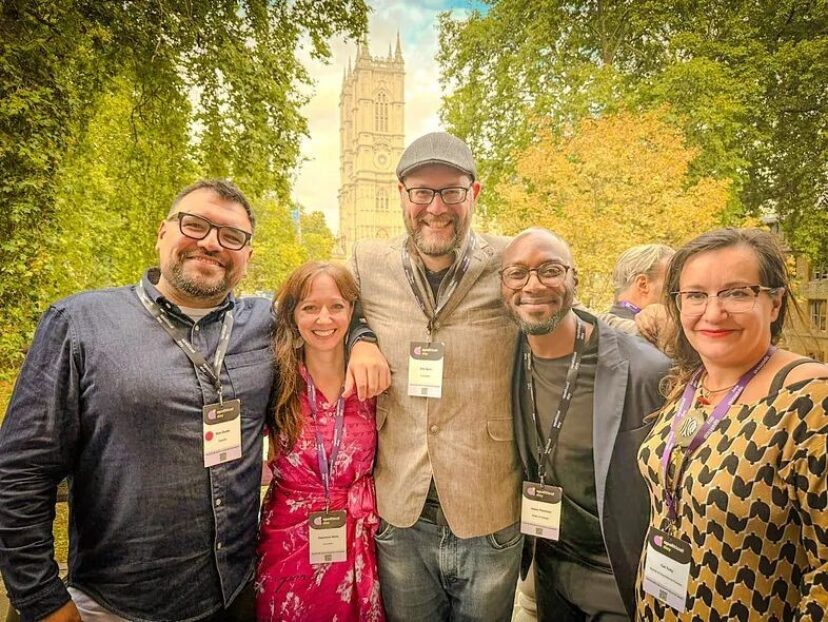
We attended Apolitical Day 2025 as practitioners working inside public innovation, embedded in different systems and contexts. Rather than observing the event from the outside, we experienced it as people carrying responsibility for change inside institutions shaped by uncertainty, speed, and constraint. This paper reflects a practice-led interpretation of what surfaced during the day and is written independently, not on behalf of any single organisation.
Over the course of the event, we noticed how often the same themes surfaced across conversations, even when people were working on very different issues in very different places. That repetition felt meaningful. It suggested a shared moment in the field, rather than a collection of isolated perspectives.
Five themes emerged across the analysis:
First, governments are being pushed to develop new institutional reflexes. Innovation is increasingly about building shared capacity to sense change early and respond with
intention, rather than relying on isolated projects or specialised teams.
Second, the practice of public innovation is shaped by tensions that cannot be resolved through tools alone. Practitioners are navigating competing demands such as speed and
stewardship, clarity and ambiguity, and central authority alongside distributed action.
Third, new capabilities are becoming central to effective public work. These include working with uncertainty, stewarding powerful technologies responsibly, building relationships
across systems and adapting quickly without undermining trust.
Fourth, the lived experience of innovation is deeply human. Practitioners are carrying responsibility inside stretched systems, balancing purpose and fatigue, and sustaining momentum under pressure.
Finally, the discussions point toward institutions that learn continuously. Signals suggest a shift toward ways of working that rely on distributed awareness, ongoing sensemaking and
judgment grounded in practice.
The implications are clear. Governments need environments that support steady learning, roles that bridge boundaries and structures that allow adaptation without losing legitimacy. They also need to recognise and support the emotional and relational dimensions of public work.
This paper is offered as a contribution from within the States of Change network to the wider public innovation community. It reflects a collective sensemaking effort, grounded in lived experience rather than abstract analysis. Our aim is to surface what appears to be emerging across the field and to help practitioners recognise their own experiences within a wider landscape of change.